Introduction
When most people think about auto body repair, they think about fixing dents and making cars look good again. But auto body work actually encompasses two fundamentally different categories: collision repair, which addresses structural and safety-related damage, and cosmetic repair, which addresses surface-level appearance issues. Understanding the difference is important for knowing what kind of repair your car actually needs, what the work involves, and what questions to ask your body shop.
This guide explains both categories clearly — what falls under each one, how the repair approaches differ, and why the distinction matters for your vehicle’s safety, your insurance claim, and its long-term value.
What Is Collision Repair?
Collision repair refers to the comprehensive restoration of a vehicle that has been damaged in an accident. It encompasses everything required to return the vehicle to a safe, roadworthy condition that meets its pre-accident structural and functional specifications.
Collision repair typically includes:
- Frame and structural repair — correcting any bends, twists, or dimensional changes to the vehicle’s frame or unibody structure
- Body panel replacement or repair — replacing or reshaping panels that have been deformed beyond surface level
- Mechanical repair — addressing any damage to suspension, steering, brakes, or drivetrain components caused by the collision
- Electrical and sensor repair — fixing any damage to wiring, cameras, or driver assistance systems
- Glass replacement — replacing windshields, side glass, or rear glass damaged in the collision
- Paint — applying color to any repaired or replaced panels
The defining characteristic of collision repair is that safety and structural integrity are the primary concerns — not just how the vehicle looks. A collision repair that restores the car’s appearance without restoring its structural integrity is not a proper collision repair.
What Is Cosmetic Repair?
Cosmetic repair addresses damage that affects the vehicle’s appearance but does not compromise its structural integrity or safety. The vehicle is safe and fully functional — it just does not look as good as it should.
Common cosmetic repairs include:
- Paintless dent repair for shallow dents and dings that have not cracked the paint
- Paint touch-up or panel repaint for scratches, scuffs, and surface chips
- Bumper cover repair for cosmetic scrapes and scuffs that have not affected the bumper’s structural elements
- Scratch and swirl removal through polishing and paint correction
- Trim repair or replacement for pieces that have been scuffed, faded, or broken
Cosmetic repairs are typically faster and less expensive than collision repairs. They focus entirely on restoring the vehicle’s appearance rather than its structural or mechanical condition.
Why the Distinction Matters
Safety
The most important reason to understand the difference is safety. A vehicle that has been in a significant collision may look fine after a cosmetic repair — but if the structural damage has not been addressed, it is not fine. Crumple zones that have been compromised, frame dimensions that are out of specification, and airbag sensors that have been affected by impact damage all represent real safety risks that cosmetic work does nothing to address.
If your vehicle was in a genuine collision — as opposed to accumulating a parking lot scuff — it needs a collision repair assessment, not just cosmetic attention.
Insurance
Insurance claims work differently depending on whether the damage is collision-related or cosmetic. Damage from a covered accident is typically handled under your collision coverage. Pre-existing cosmetic damage, or cosmetic damage from sources not covered by your policy, may not be covered at all or may require different coverage. Understanding which category your damage falls into helps you manage your claim correctly.
At Dent Buster, our team helps you navigate the insurance process regardless of the type of repair — we handle the communication with your insurer and ensure the correct claim is submitted for the damage your vehicle has actually sustained.
Resale Value
A vehicle with unrepaired or poorly repaired collision damage — particularly structural damage — suffers significantly more resale value loss than one with cosmetic issues. Serious buyers and dealerships check vehicle history reports, and any accident on record prompts closer scrutiny of the repair quality. A vehicle with a proper collision repair and quality documentation retains significantly more of its value than one with a cosmetic fix over structural damage.
When Cosmetic Damage Becomes Collision Damage
It is worth noting that the line between cosmetic and collision damage is not always as clear as these definitions suggest. A hard impact that produces what appears to be only cosmetic damage — a deep crease in a panel, a heavily displaced bumper — may have also transmitted energy to structural components that are not visible from the surface.
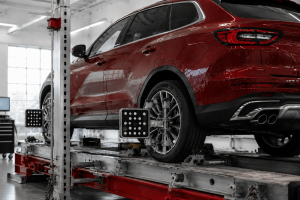
This is why a comprehensive assessment before categorizing damage is so important. At Dent Buster, we never categorize damage as cosmetic based purely on visual inspection. Our structural assessment process, using computerized frame measurement equipment, ensures that any structural involvement is identified before repair decisions are made.
The Right Shop for Both
A high-quality auto body shop should be equipped to handle both collision and cosmetic repairs with equal professionalism. The skills, equipment, and approach differ between the two — but a shop that excels at one should not be dismissive of the other. At Dent Buster Auto Body Repair, we handle everything from the most minor cosmetic touch-up to complete structural collision repairs, with the same commitment to quality and precision across every job.
Whether your car has a minor parking lot scuff or has been through a significant collision, our New York team will assess it properly, tell you exactly what is needed, and complete the work to a standard you can see and feel confident about.
Conclusion
Collision repair and cosmetic repair are different in purpose, approach, and importance. Understanding the difference helps you ask the right questions, make the right insurance decisions, and ensure your vehicle receives the level of repair it actually needs. When in doubt, always opt for a comprehensive assessment — a few minutes of professional inspection is the only reliable way to know which category your damage falls into.
Whether your car needs a cosmetic touch-up or full collision repair, Dent Buster Auto Body Repair in New York has you covered. Contact us today for a free assessment — we’ll tell you exactly what your car needs and nothing it doesn’t.